
WHY VIRTUE CANNOT BE CODED AND WHY WE MUST STOP PRETENDING OTHERWISE
By: Realistiqthinker
I have sat in rooms where algorithms decided the futures of people who would never know a decision was made. I have seen aid targeting tools determine which families receive food support in communities I worked alongside in Pakistan and East Africa-tools built by developers who had never walked those streets, never shared a meal in those homes, never looked into the eyes of someone waiting on a number to approve their survival. And every time, the output arrives with the quiet confidence of objectivity, a score, a flag and a recommendation. As if the machine had done something that a human being had not.
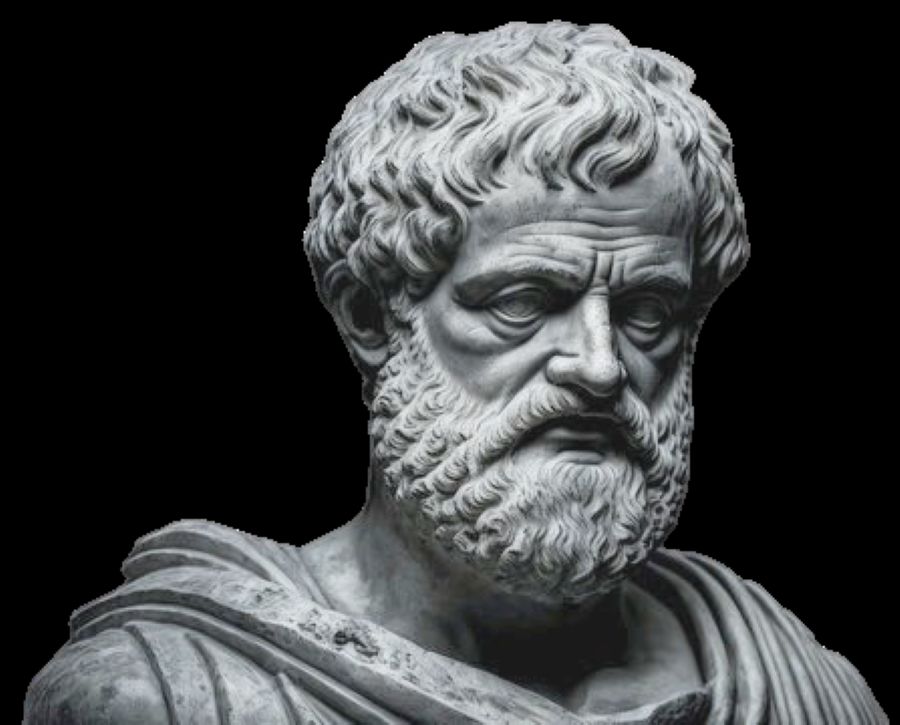
That experience never left me. And the more I have studied philosophy- particularly Aristotle- the more convinced I have become that we are making a category error of historic proportions. We are not simply automating tasks. We are delegating moral judgement to systems that were never built to carry it. And we are doing it without asking whether that is even possible.
Aristotle’s answer, I believe, is an unambiguous no.
What Aristotle actually meant by virtue
When Aristotle wrote about virtue, what he called ‘arete’ – he was not describing a rulebook. He was describing a quality of character that grows through lived experience. Therefore Virtue, for Aristotle, was not information you could store or transmit. It was something you became, slowly, through the friction of real choices in real relationships with real consequences.
At the Centre of his ethical thinking was a concept called ‘phronesis’– practical wisdom. This is the ability to perceive what a specific situation actually requires and to act accordingly. Not to follow a formula, but to see. To feel the weight of competing goods. To hold justice and mercy in tension and know, in this moment, which one must speak louder.
“We are what we repeatedly do. Excellence, then, is not an act but a habit.”
-Aristotle, in Nicomachean Ethics
No language model has formed habits. No algorithm has suffered consequences or been changed by failure. No AI system has ever looked at a human being and felt the full, irreducible weight of their particular story. It can approximate the patterns of compassion. It can produce outputs that sound like wisdom. Nevertheless, it has not lived and without the living, there is no virtue. There is only its simulation.
When efficiency becomes the only ethic

I have noticed something troubling in every AI-adjacent conversation I enter. The questions asked loudly are about capability; how accurate, how fast, how scalable. The questions that go unasked are the ones that matter most. What kind of society are we building? Who defines the values embedded in these systems? What are we losing, in ourselves and in our institutions, when we hand moral perception over to machines?
Slowly, without any single deliberate decision, efficiency becomes the operating virtue of an entire civilization. We stop asking whether a thing is good and start asking only whether it is measurable. That is a profound impoverishment; because Aristotle was clear that different goods require different modes of knowing. Mathematical truth requires demonstration. Ethical truth requires something else entirely. It requires a person who has become someone capable of seeing.
Silicon Valley, by contrast, tends to assume that every problem is ultimately an engineering problem -and that every engineering problem yields to enough data and compute. That assumption is not merely mistaken. It is dangerous, because it leads us to construct systems of enormous consequential power on a philosophical foundation that cannot bear the weight.
The accountability void nobody talks about
Here is what I find most alarming. When an automated welfare algorithm wrongly strips a family of their benefits, no one is morally responsible in any meaningful sense. The developers say they built a tool. The deploying organisation says they followed the vendor’s guidelines. The vendor points to the training data. And the family-cold, confused, and without recourse- holds a decision that no human being ever truly owned.
Virtue ethics begins with the agent. It begins with a person who acts, who can be held responsible, who can be changed by what they get wrong. AI systems are not that kind of thing. When we delegate moral decisions to them, we do not simply automate a judgement. We dissolve the moral architecture that made judgement meaningful in the first place.
Furthermore, this happens at a speed that makes accountability almost impossible to recover. By the time anyone notices that an algorithm has been systematically disadvantaging a particular community; by geography, by race, by economic profile- millions of individual lives have already been shaped by it. The harm is distributed and diffuse. And the people most harmed are, almost always, the people least able to challenge it.
What technology can do and what it cannot
I want to be precise here, because I am not arguing against artificial intelligence. I use it. I study it. I recognise what it can genuinely do such as processing patterns at scales no human team could manage, accelerating research, reducing administrative burden on overstretched public services. These are real goods and they deserve serious attention.
However, all of these capabilities are tools. And tools, as Aristotle understood, are evaluated not by their power but by the purposes they serve and the character of those who wield them. The most urgent question in AI development is therefore not technical. It is a question of character. Who are the people building these systems? What are they optimising for, and why? Do they have the moral formation; the slow, relational, hard-won formation Aristotle described, to feel the full weight of what they are doing?
I think often about this: if the engineers building AI systems for healthcare and welfare in low-income communities had to live for one month under the decisions of those systems, applying for the same benefits, being assessed by the same tools, would the systems look different? Almost certainly. Aristotle would not have found that surprising. Virtue is formed through proximity to consequence. Wisdom grows where accountability lives.
The questions our moment urgently needs
Every time I write or speak about AI, I am trying to do one thing: push the conversation toward the questions that actually matter. Not just “what can this system do?” but “what should it be used for, and by whose authority?” Not just “is it accurate?” but “accurate according to whose experience of the world?” Not just “how do we keep a human in the loop?” but “are the humans in the loop formed enough- morally, relationally, contextually to actually override the machine when it is wrong?”
These are ancient questions wearing new clothes. They are, in fact, exactly the questions Aristotle spent his life pursuing. The fact that they go largely unasked in the rooms where AI is built tells us not that philosophy has become irrelevant to technology, but that it has never been more urgently needed.
Aristotle watched a civilisation of unprecedented power gradually lose its moral imagination. He responded by insisting, relentlessly, that the question of how to live well was prior to every other question. That the good city could only be built by good people. And that good people were not born-they were formed. Slowly. Painfully. Together.
Silicon Valley is building infrastructure that will shape human life for generations. The least we can ask- and the least Aristotle would have demanded is that the builders pause and ask themselves, with genuine honesty: are we good enough for this task?
That question- quiet, inconvenient, and entirely inescapable- is Aristotle’s warning. I believe we would do well to finally hear it.
About the Author
Realistiqthinker
Realistiqthinker is an independent thinker and writer with a background in philosophical and ethical studies, theological ethics, and international development. He holds a Certified Monitoring and Evaluation Professional qualification and has completed studies in Artificial Intelligence. His fieldwork experience spans community development contexts in Pakistan and East Africa. He writes at the intersection of philosophy, human dignity, social justice and emerging technology- asking the questions that our increasingly automated world urgently needs to face.